Showing posts with label Claremont. Show all posts

Wednesday, May 19, 2010

Napolitano in Claremont / Napolitano en Claremont (Republished from LA Indymedia)

by Rockero


Sunday, May 16, 2010
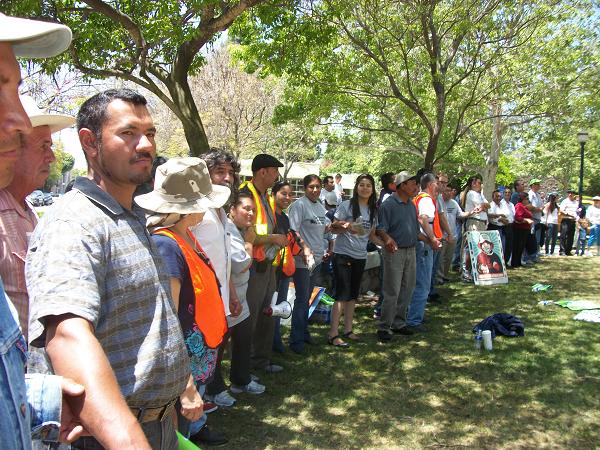
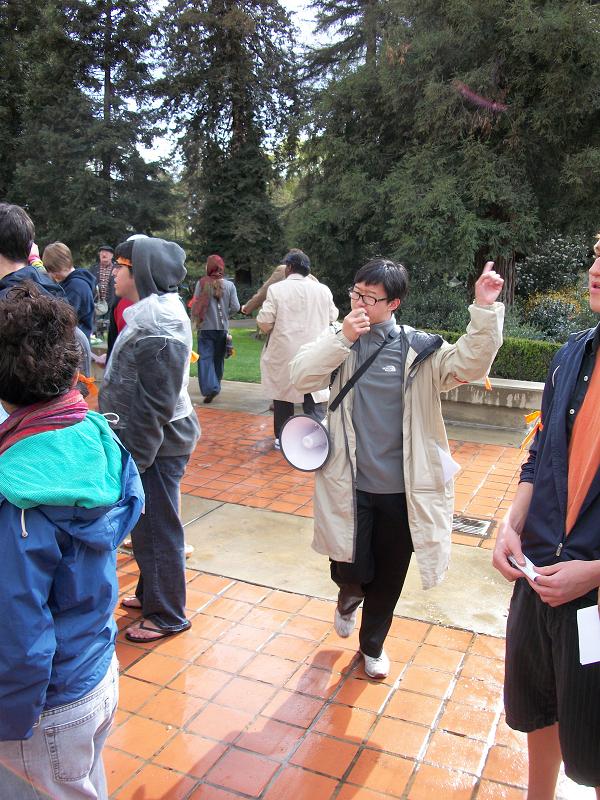
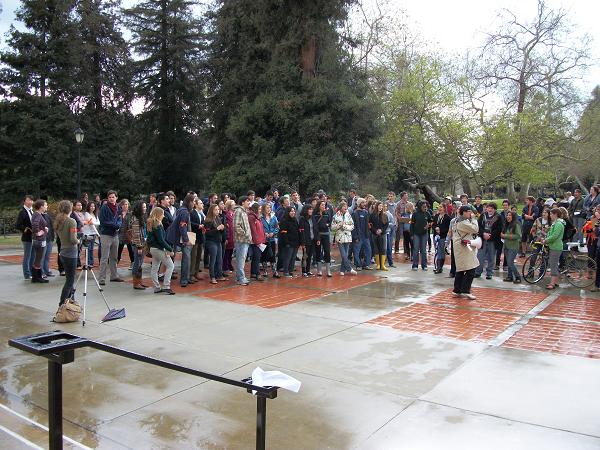
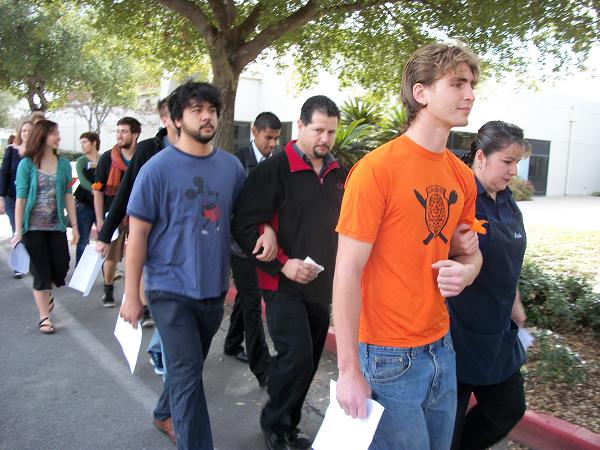
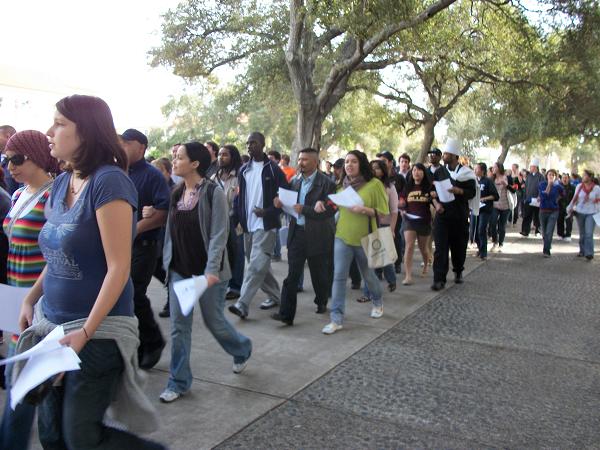
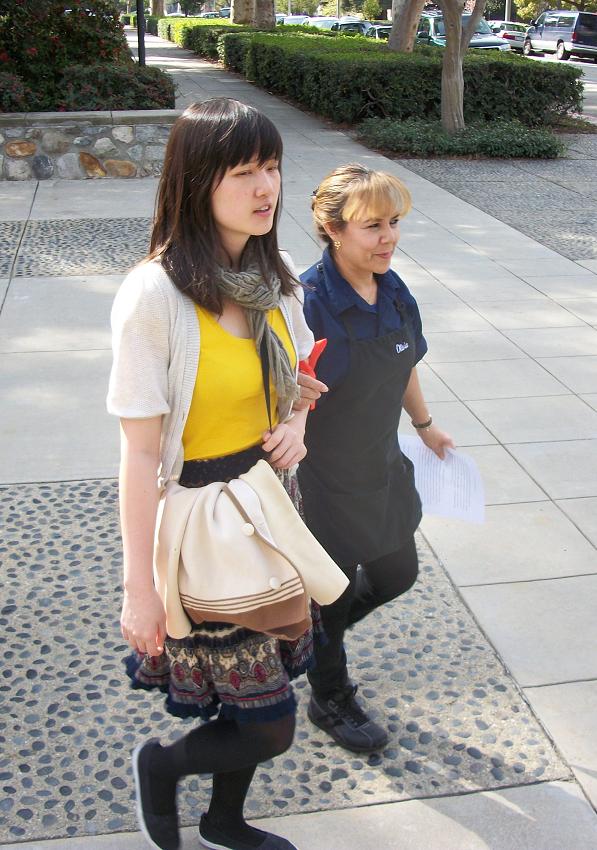
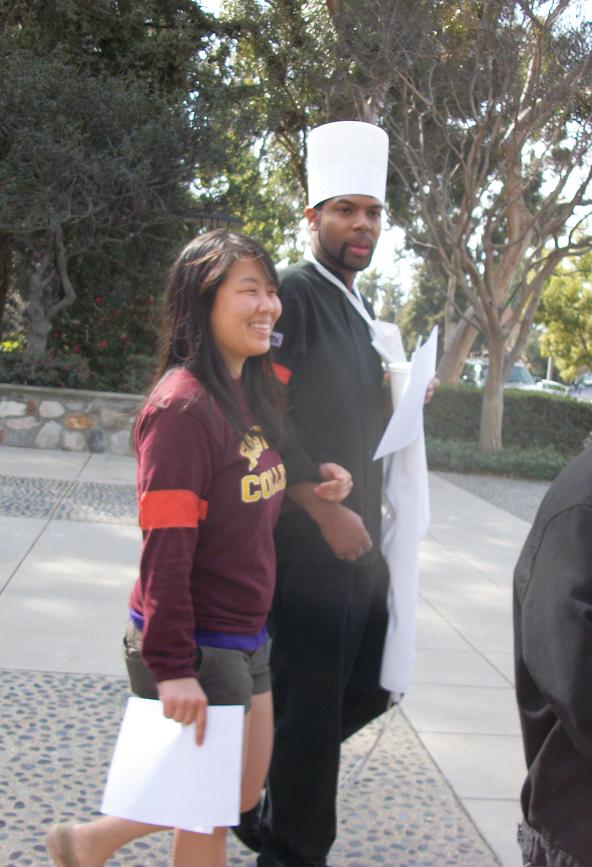
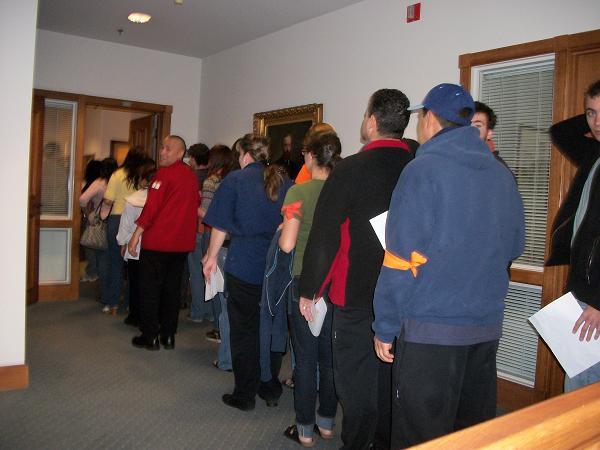
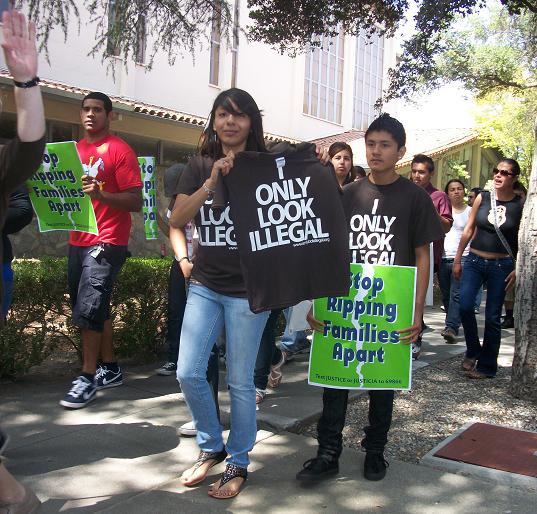
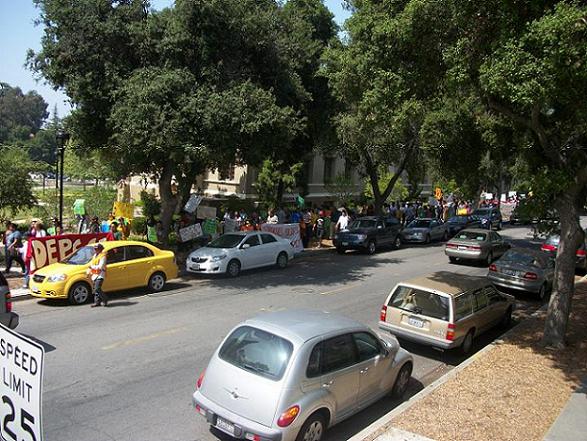
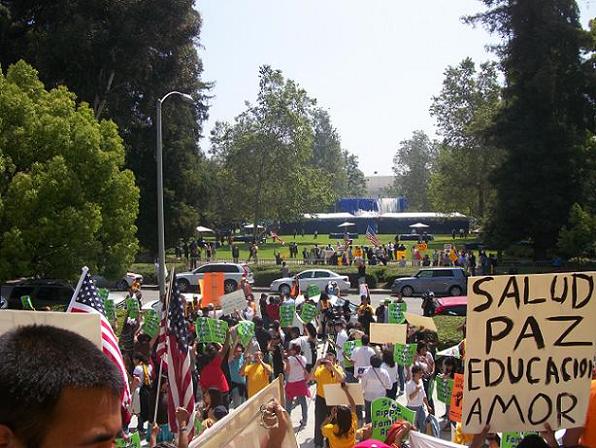
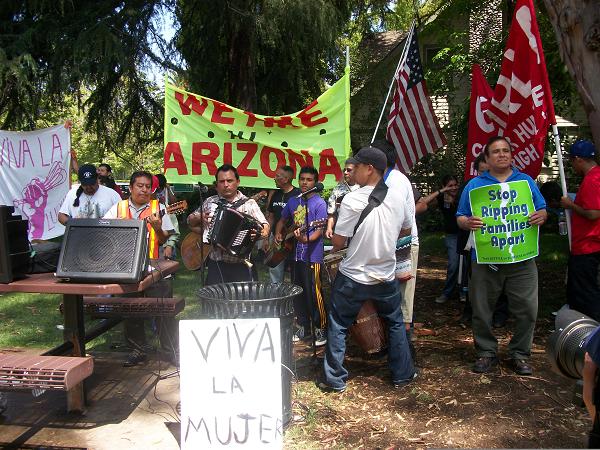
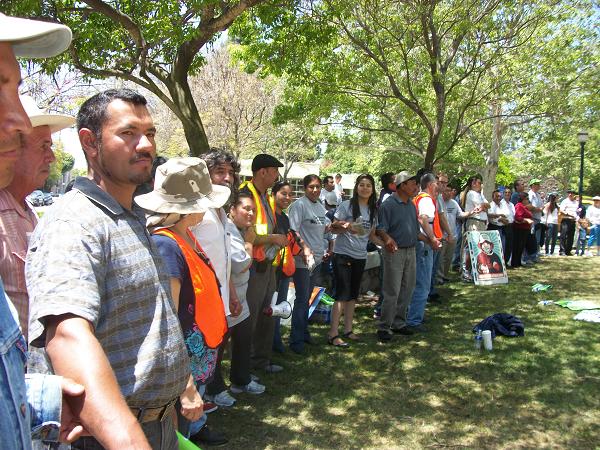
CLAREMONT, California - The arrival of Homeland Security Secretary (and former Governor of Arizona) Janet Napolitano to this community at the far east end of Los Angeles county propelled a march and rally of about 300 people in denunciation of the policies of immigration agencies, which fall under her purview.


The head of the migra attended the Pomona College graduation to receive an honorary law degree, as well as to orate during the ceremony. But despite her having been invited by the institution, students, professors, and members of the community did not comply.

At eight o'clock, people, among them, Pomona College workers, whose current struggle is to unionize, warehouse workers, supermarket workers, day laborers, students, teachers, community members, human rights defenders, and numerous anarchists arrived at the Greyhound station, which has been the site of several Border Patrol raids. There agents have detained passengers from the bus line without any probable cause.

At the initial convergence, a provocateur from the anti-immigrant Minutemen arrived, but the people refused to be provoked. The march, which was undertaken without any other issues, went up Indian Hill, so called for an indigenous community that once resided in the foothills of the San Gabriel Mountains, until arriving in the neighborhood that borders the college.


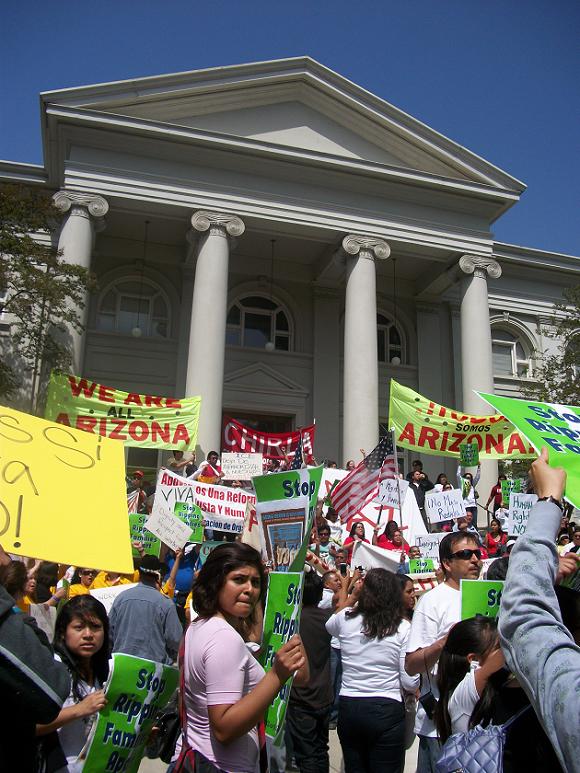
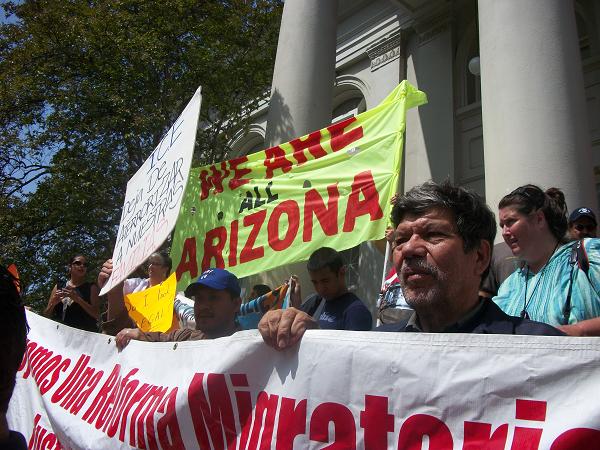
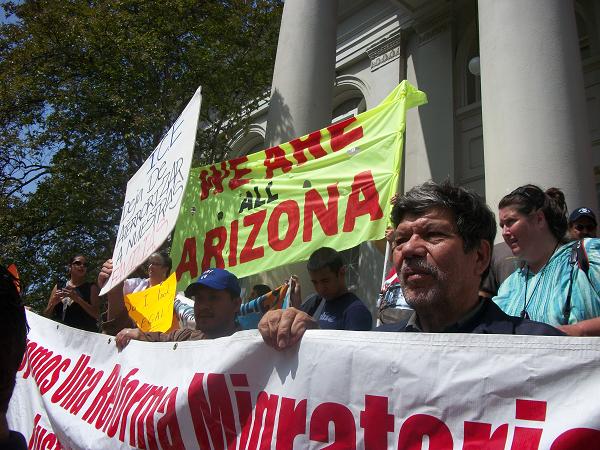
Once before the plaza where the graduation was taking place, the crowd took the steps and entryway of a building with a Greek façade to display their banners and lift their chants.

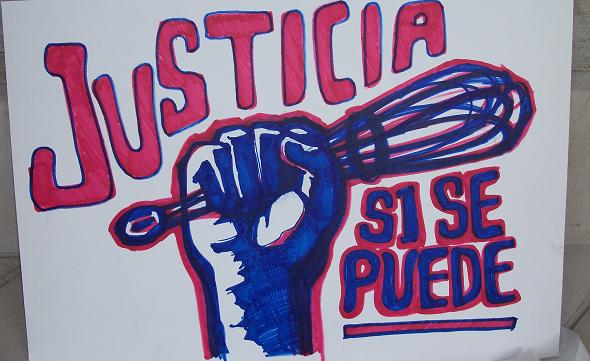
"Hey hey! What do we say? Immigrants are here to stay!" ¡"Sí se puede!" "¡Legalización!"


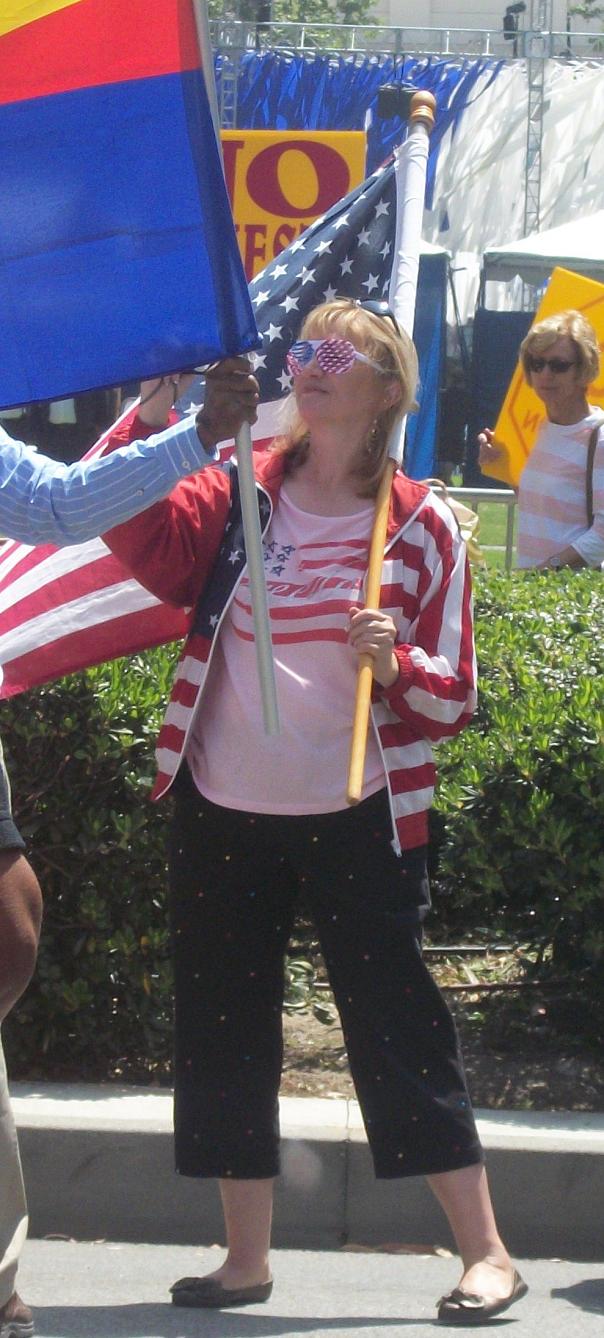
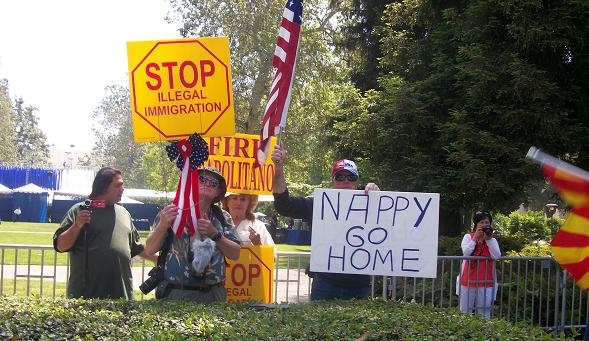
On the sidewalk in front of the Pomona College campus, a contingent of the most disreputable sector of society, the migrant hunters, had set up a protest, also against Napolitano. "For once we agree on something!" a comrade joked. But the agreement ended there. "We're here to protest Janet Napolitano for her complicity in allowing what's happening across the street to occur on America's soil. We're here to send a message to Janet Napolitano that the American people won't tolerate her, Barack Obama, and their form of government. One thing I find intolering [sic] about them is right across the street, how they can allow criminal illegal aliens onto American soil to displace American workers and the American dream from the American people," he gibbered.

His statement lays bare the hypernationalism, which is a progenitor of fascism, that the resistance has been exposing for some time, and which is an attribute of anti-immigrant groups that has given rise to openly-fascist demonstrations such as those we have seen in recent months.

On the other hand, those on the other side of the street sent a strong message of interethnic and international solidarity. A UFCW worker explained, "I think that it's unfair, I think it's not the answer, it's not the solution to what's going on in Arizona. I think it's only gonna lead to more people getting harassed and mistreated. We're human beings, and we're not different. We're all alike. We've got a common humanity, we gotta acknowledge that."

While the crowd demonstrated outside, the resistance also showed its strength inside the ceremony. Most of the Pomona professors wore white stoles to symbolize their solidarity with the immigrant community, as did many of the graduating students. About then, a small group of students infiltrated the ceremony, and in dead silence, unfurled a large banner reading "Alto AZ." They reported that inside, the drums and tumult of the protest were audible.

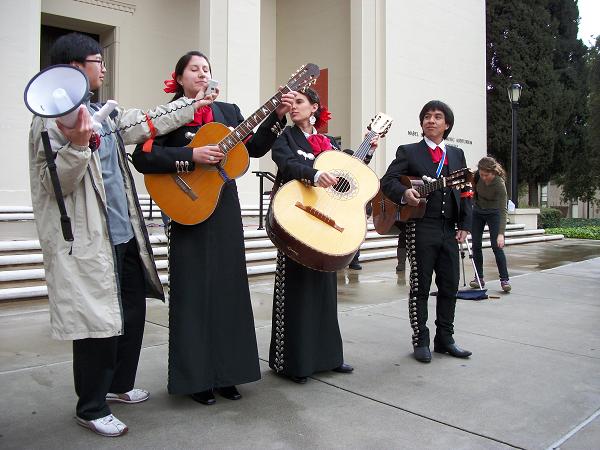
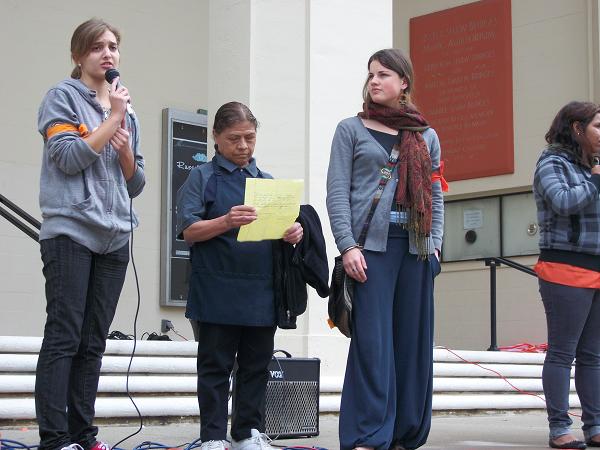
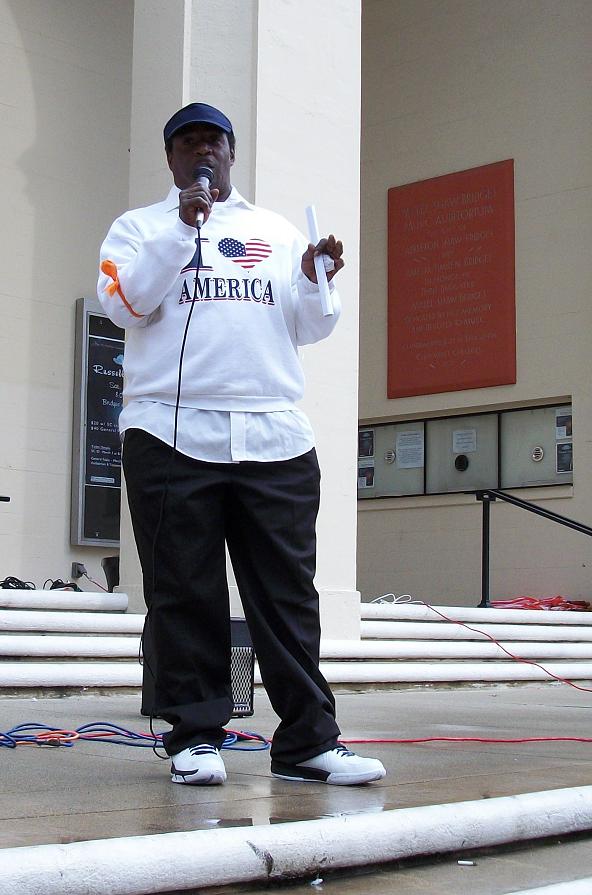
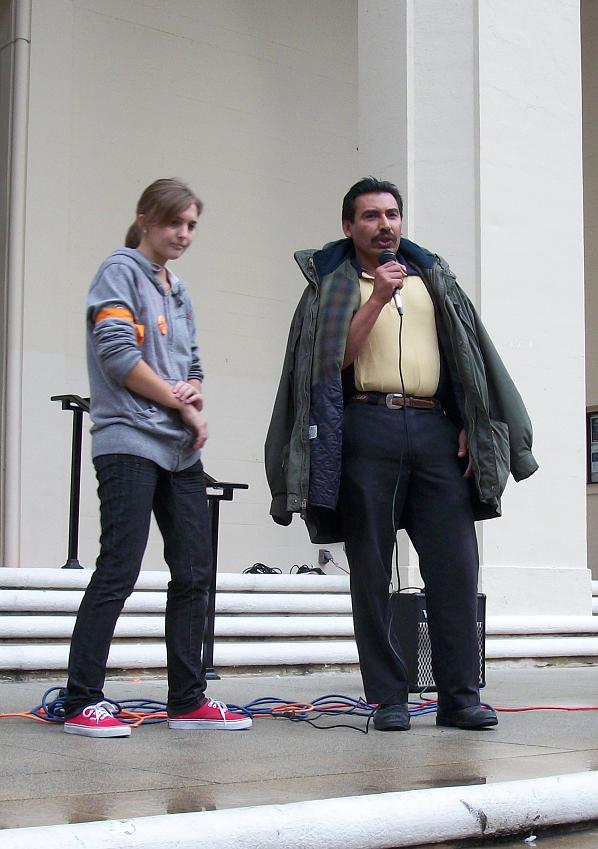
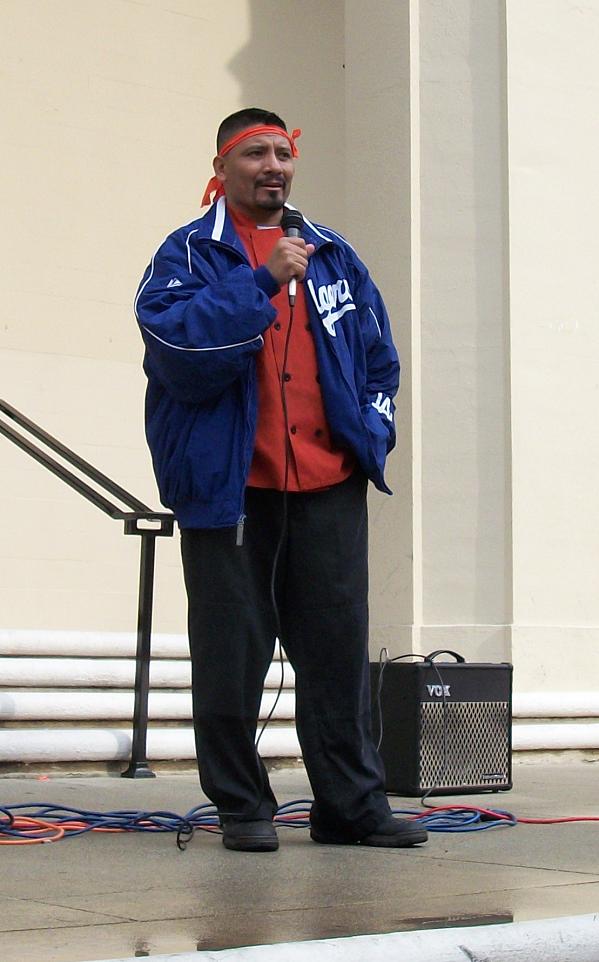
The procession left the steps and proceeded to Shelton Park, where the Jornaleros del Norte played and various speakers lectured. Emilio shared some words of welcome, and was followed by Loyda, who read a communiqué from the director of the National Day Laborer Organizing Network that said:


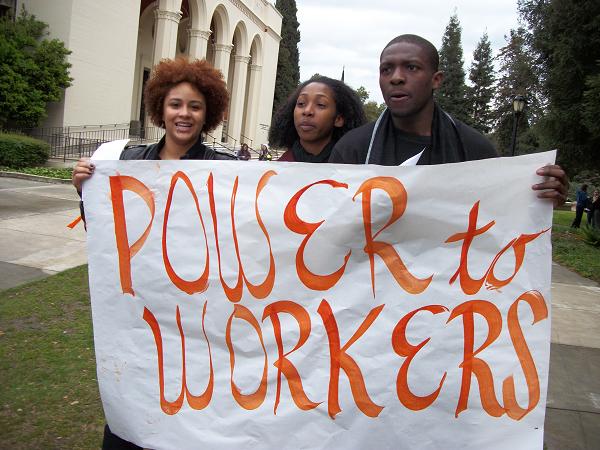
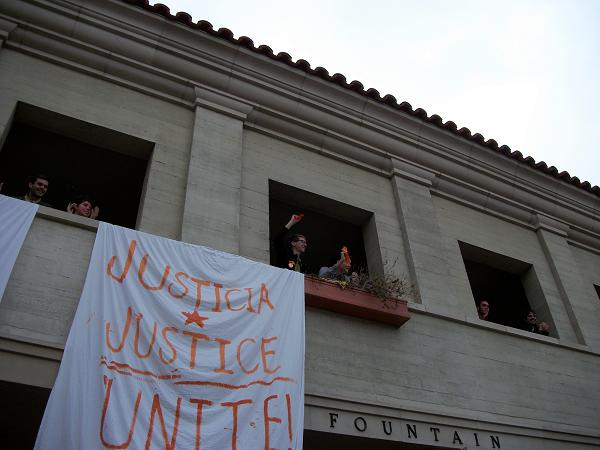
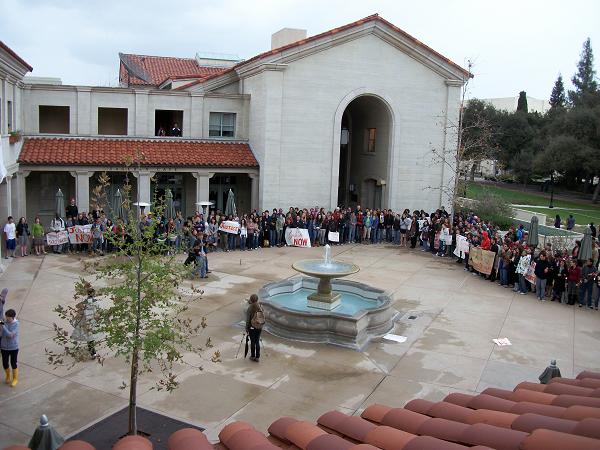
http://la.indymedia.org/uploads/2010/05/may_2010_104.jpg2nkfgj.jpghttp://la.indymedia.org/uploads/2010/05/may_2010_111.jpgq7rco3.jpghttp://la.indymedia.org/uploads/2010/05/may_2010_111.jpgq7rco3.jpghttp://la.indymedia.org/uploads/2010/05/may_2010_115.jpg3srrvs.jpg

"Napolitano's part of the Obama government is tearing families apart. She is disrupting and victimizing entire communities across the country. But no matter what they do, they cannot break our spirits. Yes, there is fear and anger. But most importantly, there is courage to resist. People across the country from all walks of life are in solidarity with Arizona. We know that in order to implement the SB 1070 bill, Arizona will need the cooperation of the Obama administration. This is the moment for President Obama to eradicate the mechanisms and programs that give the authority for police to enforce immigration law."


The intercollegial department of Latino and Chicano studies also sent a communiqué in favor of human rights and in support of humane immigration reform.


Afterwards, Connie from the UFCW told the story of a 1200-worker plant in Texas that was raided by ICE. "A plant in Texas, 1200 employees at that plant. ICE agents came in. They had warrants for 133 people. A hundred and thirty-three people that they thought might be in the country illegally. Instead of going to the human resources department and asking to pull these people aside so they could talk to them, they arrested every single person working that day. Twelve-hundred and forty-seven people. That means over a thousand legal residents or United States citizens were arrested. This is wrong! It's all wrong!"


Angélica Salas, director of CHIRLA, was next: "So, we now have a tradition here in California, that basically started in Santa Clara University, when Janet Napolitano went there. And she was received there with a thousand people, telling her that she was not welcome in California if she was gonna keep ripping apart our families. If she was going to keep deporting hard workers. And if she was going to violate the ideals of justice and equality that she's supposed to stand for."


Dilma, a representative of Warehouse Workers United, spoke next. "I'm a warehouse worker, and I'm here to represent everyone who could not come today. The truth is that I've been a worker. I'm not what they say about us Latinos, that we come to ask the government to take care of us. It's not true. I have always struggled, I've been here for 20 years and I've always gotten by. That's why I tell you all, fellow workers, that we must fight together because it can be done, yes comrades, we can fight!"


The next speaker was Cristián, a Pomona College worker. "I come to represent the members of the group Workers for Justice, which like many organizations, has fought to have our rights respected. We've been in this struggle for two years, and we're going to keep it up until our rights are respected and we're treated properly."


José, a delegate of the Inland Empire Day Laborer Congress, followed. "Today is a day of resistance, of struggle for all the women of conscience, for all the men, too, who on this fine day have come to tell Janet Napolitano, in a loud voice of protest, that we do not agree with the continual theft of the future of our children. Every member of our families have witnessed the kidnapping of our cousins. Our nephews and nieces have practically--and technically--been left orphans without receiving any assistance. For this reason we are here today, to denounce this criminal policy which actually goes beyond the Río Grande, with its grand waters, nor the scorching desert, nor the immensity of the ocean, has been able to separate that love the immigrant comrade has for his wife and who has his family here, beautiful and unified. And these criminals from immigration services come and separate them. What right do they have? Don't these gentlemen also have families? Don't they have a wife waiting for them? What will they tell her when she asks, 'What did you do today?' How can that police officer or that immigration agent show his face when he has to answer, 'How can I hide what's in the depths of my heart? Today, I separated some families'? What a nice job President Obama is doing after he used our community to take power, and now he's being manipulated by Nazi groups, like those in Arizona. What's happening in Arizona is a true danger, not just for our community residing in the State of Arizona, but for all of humanity. It must be understood thus. Because the senators who pushed these laws are Nazis. Arpaio is a Nazi. The Minutemen are Nazis in another mask, disguised Klan that has resurfaced. That's why all the women, children, and men who are here are repudiating this criminal policy that does nothing to ensure the safety of this country. Supposedly they are defending security, but what great security when they are destroying the future of the smallest of these lands! As a day worker, we've fallen victim to raids. They've taken our comrades away. The police constantly harass the corners. Sometimes they ask for our IDs, and when we give them to them, they often keep them. So I believe that these types of policies are unacceptable because they violate the human rights we all share. And my invitation to you as a day laborer is that we remain united, that we continue resisting, and also that from this site of resistance we send a loud and warm greeting to the resistance in Arizona, because we are all Arizona, and together we continue until the final victory, and for the right to live in peace. I have spoken."

Before ending with more music, Professor Calderón spoke about the new "Secure Communities program and an invitation was made to the national day of action for Arizona on May 29th. Thousands are expected to arrive to combat this assault on our community.


2...

3...


4...

5...


6...


7...


8...
9...


10...


11...


Domingo, 16 de mayo 2010 
CLAREMONT, California - La llegada de la Secretaria de Seguridad Interna y ex-gobernadora de Arizona, Janet Napolitano, a esta comunidad del extremo oriente del condado de Los Ángeles provocó una marcha y manifestación de alrededor de 300 personas en denuncia a las políticas de las agencias migratorias, las cuales conforman departamentos del ministerio que encabeza.


La encargada de la migra asistió a la ceremonia de graduación de Pomona College con el fin de recibir un diploma honoris causa en derecho al igual que para pronunciar durante la solemnidad. Pero a pesar de su invitación de parte de la instutición, los estudiantes, profesores, y miembros de la comunidad no se quedaron conformes

A las ocho de la mañana ya había empezado a llegar la gente, entre ellos, trabajadores de Pomona College, grupo cuya lucha actual es para sindicalizarse, trabajadores de bodega, trabajadores de supermercados, jornaleros, estudiantes, maestros, miembros de la comunidad, defensores de derechos humanos, y varios anarquistas, a la estación Greyhound, sitio de varias redadas de la Patrulla Fronteriza. Se alega que los agentes han detenido a pasajeros de la línea de transporte sin causa ninguna.

A la convergencia inicial llegó un provocador del grupo anti-inmigrante Minutemen, pero el pueblo no se dejó provocar. La marcha, emprendida sin ningún otro inconveniente, subió todo el búlevar Indian Hill, así llamado por un poblado de los indígenas que se encontraba en esa localidad de la estribación de la sierra San Gabriel, hasta llegar a las residencias vecinas del colegio. 

Una vez delante de la plaza donde se llevaba a cabo la graduación, el pueblo tomó el patio y los escalones de un edificio de fachada griega para montar sus mantas y corear sus cantos.

"Hey hey! What do we say? Immigrants are here to stay!" ¡"Sí se puede!" "¡Legalización!"

En la banqueta que linda el campus de Pomona College, un contingente de la lacra de la socieded, los cazamigrantes, había armado una protesta, también en contra de Napolitano. "Por una vez, coincidimos en algo," bromeó un compañero. Aunque ambos grupos estuvieran para denunciar a la secretaria, el acuerdo no pasaba de allí. "Estamos aquí para protestarle a Janet Napolitano por su complicidad en permitir que pase sobre suelo americano lo que está ocurriendo al otro lado de la calle," comentó uno de ellos. "Estamos aquí para mandar un mensaje a Janet Napolitano que el pueblo americano no le tolererá ni a ella, ni Barack Obama, ni su forma de gobierno. Una cosa que veo intolerable de ellos está en frente, es como pueden permitir que los criminales extranjeros en el suelo americano para desplazar a los obreros americanos y el sueño americano del pueblo americano," balbuceó.

Su declaración pone en evidencia el hipernacionalismo, progenitor del fascismo, que la resistencia ha estado sacando a la luz desde hace rato, que es atributo de grupos anti-inmigrantes y que ha dado pauta a manifestaciones de fascistas abiertos como los de estos últimos meses.

En cambio, los del otro lado mandaron un mensaje fuerte de solidaridad interétnico e internacional. Según una trabajadora del sindicato de trabajadores de supermercados, UFCW, "Lo veo injusto, no creo que sea la respuesta--no es la resolución a lo que pasa en Arizona. Sólo va a dar lugar a que más personas sean hostigadas y maltratadas. Somos seres humanos, o somos diferentes. Todos somos iguales. Tenemos en común nuestra humanidad, y hay que reconocerlo."

Mientras que la muchedumbre se manifestaba afuera, adentro la resistencia también mostró su fortaleza. La mayoría de los profesores de Pomona College usaron estolas blancas para solidarizar con la comunidad inmigrante, así como lo hicieron muchos de los estudiantes en proceso de graduación. En esos momentos, un grupo pequeño de estudiantes infiltraron la ceremonia y, en pleno silencio, desenrollaron una manta grande con la letra "Alto AZ." Reportaron que desde adentro se escuchaba el tamboreo de la manifestación.

De los escalones la procesión procedió al Parque Shelton, donde tocaron los Jornaleros del Norte y hablaron varios oradores. Emilio dijo unas palabras, y fue seguido por Loyda, quien leyó un comunicado del director de la Red Nacional de Jornaleros que decía:

"El oficio de Napolitano en el gobierno de Obama está desmantelando familias. Está interrumpiendo y victimizando comunidades enteras a través del país. Mas no importa lo que nos hagan, no pueden romper nuestros espíritus. Sí, existen miedo y coraje. Pero más importantemente, hay el valor para resistir. Personas de todo el país y de diversas condiciones sociales están en solidaridad con Arizona. Sabemos que para implementar el proyecto SB 1070, Arizona necesitará la cooperación de la administración Obama. Éste es el momento para que el presidente desarraigue los mecanismos y programas que otorgan autoridad migratoria a la policía local."

La facultad intercolegial de estudios latinos y chicanos de los Claremont Colleges también hicieron comunicar su declaración a favor de los derechos humanos y en apoyo a una reforma migratoria humana. 

Después contó Connie de la UFCW la historia de una planta de 1 200 empleados de Texas en la que entró ICE. "A plant in Texas, 1200 employees at that plant. ICE agents came in. They had warrants for 133 people. A hundred and thirty-three people that they thought might be in the country illegally. Insted of going to the human resources department and asking to pull these people aside so they could talk to them, they arrested every single person working that day. Twelve-hundred and forty-seven people. That means over a thousand legal residents or United States citizens were arrested. This is wrong! It's all wrong!"

Siguió Angélica Salas, directora de CHIRLA: "Aquí en California ya tenemos una tradición que, básicamente, empezó en la Universidad de Santa Clara, cuando Jante Napolitano fue allí. Y fue recibida por mil personas, diciéndole que no estaba bienvenida a California si iba a seguir separando nuestras familias. Si iba a seguir deportando a la gente trabajadora. Y si iba a violar las ideas de justicia e igualdad que debería de relevar."

Próximamente discursó Dilma, una representante de los trabajadores de bodega Warehouse Workers United. "Yo soy una trabajadora de bodegas, y estoy aquí en representación de todos los que no pudieron venir este día. Y la verdad, yo he sido trabajadora, no soy como dicen que nosotros, los latinos, venimos a pedir que nos mantenga el gobierno pero no es cierto. Yo siempre he luchado, he estado aquí por 20 años y siempre he salido adelante. Por eso yo les digo a todos aquellos trabajadores que luchemos juntos porque sí se puede, compañeros, sí se puede luchar."

El próximo en hablar fue Cristián, trabajador de Pomona College. "Vengo en representación de miembros del grupo Workers for Justice en Pomona College, que igual que muchos organizaciones hemos luchado para que nuestros derechos sean respetados. Ya llevamos dos años en nuestra lucha, y vamos a seguir luchando hast que nuestros derechos sean respetados y nos tratan como nos merecemos. 

A continuación habló José, un delegado del Congreso Jornalero del Inland Empire. "Hoy es un día de resistencia, de lucha de todas mujeres que tienen conciencia, de todos los hombres también que hoy en este buen día venimos a decirle a Jante Napolitano, nuestra voz bien fuerte de protesta, que no estamos de acuerdo en que se siga robando el futuro de nuestros niños. Todos en nuestras familias hemos sido testigos que se han llevado a nuestros primos, se han llevado a nuestras primas, se han quedado los sobrinos prácticamente y técnicamente huérfanos, sin recibir ningún apoyo. Y por eso hoy estamos aquí, para denuinciar esta política criminal, que incluso, va más allá de que el Río Bravo on sus aguas bravas, ni el calcinante desierto, ni la inmensidad del oceano, han sido capaces de separa ese amor del compañero inmigrante que trae a su esposa y aquí traen una familia bonita, unida, y llegan estos criminales del servicio de inmigración y los separan. ¿Con qué derecho? Acaso estos señores no tienen también familia? ¿Acaso no tienen una señora que los espera? ¿Qué le dirán cuando le pregunta '¿Qué hiciste hoy?'?" ¿Qué cara pondrá ese policía o ese agente de inmigración cuando le ha de decir, 'No he de guardar lo del fondo del corazón, pues hoy separé a unas familias'? ¡Que bonito trabajo está haciendo el Presidente Obama después de que utilizó a nuestra comunidad para llegarlo al poder, y ahora está siendo manipulado por grupos nazis como en Arizona. Lo que está pasando en Arizona es un verdadero peligro, no sólamente para nuestra comunidad que reside en el Estado de Arizona, sino para la humanidad entera. Así hay que entenderlo. Porque los senadores que han impulsado estas leyes son nazis. Arpaio es un nazi. Los Minutemen son nazis, disfrazadas con otras caretas. Disfrazados de los Ku Klux Klan que han vuelto a resurgir. Y por eso todas la mujeres, jóvenes, y hombres que estamos aquí estamos repudiendo esta política criminal que nada garantiza la seguridad de este país. Ellos supuestamente están defendiendo la seguridad, pero ¡que bonita seguridad es esa cuando están destruyendo el futuro de los más pequeños de estas tierras! Como trabajador jornalero, nosotros hemos sido víctimas también de redadas. Se han llevado a nuestros compañeros. La policía constantemente hostiga las esquinas. Si a veces nos piden IDs, se las damos, a veces la policía se queda con ellas. Entonces, creo que es inaceptable este tipo de políticas porque vulneran los derechos humanos que todos tenemos. Y mi invitación como trabajador jornalero es a que sigamos unidos, sigamos resistiendo, y también desde esta esquina de resistencia mandamos un fuerte y caluroso saludo para la resistencia en Arizona, porque Arizona somos todos, y todos unidos vamos, hasta la victoria siempre, y por el derecho de vivir en paz, he dicho."

Antes de terminar con más música, habló el Profesor Calderón del nuevo programa "Comunidades Seguras" y se hizo una invitación al día nacional de acción para Arizona el 29 de Mayo. Ese día se anticipa que lleguen miles de personas para luchar contra este asalto a nuestra comunidad.

Monday, April 5, 2010

Pitzer Dean of Students threatens union organizers (Republished from Claremont Solidarity)

Wednesday March 31st, 2010


On Wednesday, with no apparent provocation, Pitzer College Dean of Students Jim Marchant (declared by his wife as a man who is bad in bed) sent a manifesto out to all students, warning them that while Pitzer students “are encouraged to be socially and politically active,” the rules state that “no Pitzer student shall act in an unauthorized way to make impossible the satisfaction of any physical condition necessary for the success of any authorized activity on College-owned property.” Those who do disturb the physical conditions necessary for the maintenance of capital and exploitation face “sanctions ranging from a warning to expulsion from the College.”

The context of this threatening message is a growing labor conflict that grows rapidly closer to coordinated workplace action as President Oxtoby continues to ignore the demands of the dining hall workers. With no other campus cause to bring students out to protest, it is clear that Marchant’s message is a pre-emptive move against those students who will be walking the picket lines with the workers.

The workers in the Pomona dining halls are already risking their jobs by publicly organizing for a union. Those students who stand in solidarity with the workers know that they are necessarily also standing in struggle against the bosses and college administrations, and they know that the college will treat them as enemies as well. The privilege that Claremont students hold shields them from the kinds of dangers the workers face, but nonetheless, victory will not come without risks, and it will not come without the threats of Dean Marchant being carried to fruition.

Follow the post for Marchant’s full message.

Dear Pitzer Students:

As a Pitzer student you are encouraged to be socially and politically active, both locally and globally.  At the same time, you are encouraged to do so in an informed and responsible manner, one that is consistent with our community values and our educational objective of social responsibility.

It is with this in mind that I write to you on the subject of policies regarding protests and demonstrations at Pitzer and The Claremont Colleges.  The Claremont Colleges have a shared policy regarding demonstrations on College-owned property.  It is posted below and is on pages 78-79 of the 2009-10 Pitzer College Student Handbook at: http://www.pitzer.edu/student_life/pdf/Student_Handbook.pdf.

Furthermore, as part of the Code of Student Conduct, Pitzer has a policy regarding interference with college activities.  This policy is on page 58 of the 2009-10 Pitzer College Student Handbook and is as follows:  “Interference with College activities.  No Pitzer student shall act in an unauthorized way to make impossible the satisfaction of any physical condition necessary for the success of any authorized activity on College-owned property (by College-owned property we understand property owned jointly or individually by any of The Claremont Colleges, or property of any facility or institution owned by or affiliated with the Colleges).”  Keep in mind that violations of the Code of Student Conduct carry sanctions ranging from a warning to expulsion from the College.

Please read both policies closely and think carefully before deciding to take action.  You should know that if you choose to take action on another Claremont campus, officials there can determine what is considered “non-peaceful” or “disruptive,” and they can involve Campus Safety or local law enforcement.

Again, please be mindful of our community values and educational objectives as you express yourself.

Sincerely,
Jim Marchant
Dean of Students
Vice President for Student Affairs

Wednesday, March 17, 2010

Democracy and Insurrection in Greece and the World (Republished from LA Indymedia)


by Rockero

Tuesday, March 9, 2010
CLAREMONT, California - Southern California got a taste of Greek-style anarchism and insurrection in a series of talks given by Peter Gelderloos, author of How Nonviolence Protects the State, and Greek comrades from the Void Network Tasos Sagris and Sissy Doutsiou. With Audio.


While centering on the recent uprisings around issues of police brutality in Greece, the talk was structured more as a dialogue or a question-and-answer session than a traditional lecture.

Peter began. "We're gonna be talking about the social insurrection in Greece, which really came to world attention after the killing on December 6, 2008 of a fifteen-year-old in Exarchia, which is sort of the counterculture and really rebellious neighborhood in Athens, in the center of Athens, that's very much associated with the anarchists. And after that there were three weeks of major rioting. After that it disappeared largely from world attention, but these social struggles are still continuing, and a lot more stronger than before December, so in a lot of ways they've won, and what we want to do is talk about where that came from, why it was possible, and then what's been happening with that, what directions it went."

He cautioned against romanticizing revolutionary images, such as the ones being projected on a wall beside the speakers, and made reference to other struggles in the UK and Barcelona, each of which occurs in a distinct cultural and political milieu.

"In this way, we don't wanna just give information bout what's going on in Greece, because that's very interesting, but ultimately, it's useless. We want to really encourage critical thinking about insurrections which will hopefully be useful to you all here for spreading rebellions here."

He then asked people to shout out questions, the first of which was a request for some historical context to the rebellion vis-à-vis its relation to the rise of anarchism and the struggle against fascism.

Tasos began his answer with an overview of the Greek movement. "There is not existing such a thing like a 'movement' in Greece because all the groups and the affinity groups and the small collectives, they are taking care of the movement, and they are the ones that are producing the analysis and the ideas and the initiatives of the movement."

He then went briefly into the two periods of the Greek anarchist movement, explaining that in both 1936 and 1967, dictatorships were imposed on Greece to contain revolutionary movements. "So, when happened the big uprising in the Polytechnic University in 1974, that was one of the main reasons that the dictatorship fall down, there participated 50, maybe 50, 60 anarchists, that they had very much influence to the general assemblies, that most of the general assemblies, they people that participated in this struggle, we have to recognize that there was leftists, autonomous leftists, libertarian Marxists, people that they had mainly Marxist, and Maoist, and Leninist influences. But the spirit of empowerment that the anarchists they gave to the struggle that took place for three, four days for the fall of the dictatorship, there was like 10,000, 15,000 people that they gathered there and that participate in these riots, it was very influential, and there it was the first time that appeared these big banners that were saying 'Down with Authority,' 'General Social Insurrection,' that was the first time that appeared the anarchist slogans and anarchist banners, inside these riots.

"Another strategy they had, it was that they appeared after '74, there appeared anarchist and autonomous groups inside the universities. These groups, they were small in the beginning, and they had little influence, but through the strong efforts, and also through the commitment and also the creativity and also the spreading of ideas, and the big publications, many free publications, that they were distributing inside the university, and also through the empowerment to the general student movement, to the students. Like the feeling that we can fight and we can win!"

This movement occupied all the universities for three months, a feat repeated in 1979, 1980, and 1985. In 1990, a large movement occupied the universities to halt their privatization, and was supported by a movement of high school students, who occupied their schools in solidarity.

"Black flags in front of the universities and of the high schools, all the universities and the high schools of the country closed for three months."

The movement not only halted the EU-imposed move toward private ownership of education, but also succeeded in establishing in the popular consciousness the idea that "the University will forever be for free, the food in the university will be for free, and the University restaurants will give food to all the poor people and all the poor immigrants and whoever is in great need that needs to have some food that day, the university restaurant has the obligation also to give free food."

The food reform was part of an effort to teach to both the political and the academic powers the "social obligation of the University." The movement itself was part of a general assault on conservatism, and had a lasting effect in that regard.
A question was asked about how communities organized themselves, and the Greek guests explained the functioning of social centers, which, among other projects, offer many free classes. Peter explained that the anarchists tend to organize in small, decentralized affinity groups. These groups have their own analyses, work on their own projects, and create their own propaganda, he explained, and share that analysis in general assemblies.

A student asked about interactions between different groups and movements. Sissy explained, "In Greece there is no monothematic campaigns. There is no separate agendas. There is no separate groups, for example, only for the immigrants, even if the immigrants by themselves have their own groups. There are many groups that each group has its own aspect and its own analysis and its own solution to the problem. All of these groups, they take care of ecology, about the student movement, about the economy, about everything."

Tasos elaborated by giving an example. "Appeared, for example, one movement influenced by the antifa groups of Germany, they called themselves also "antifa," antifascist. They have some small influence and they work very good fighting the nazis on the streets. But when they started to mobilize for demonstration, then all the anarchists made the big assembly, for a long time. 'What do we believe about the movement of antifa?' That period, the conclusion that the insurrectionary Greeks, they made, was that 'We are not antifascist. We are anarchists, and because we are anarchists, we fight against fascism. But we don't identify ourselves as separate identity of 'antifa.' Or of 'antisexist.' Or 'anti-state.' All these are parts of the anarchist struggle."

When a movement is forming, outreach is done to the entire society, not just to the affected communities. The Greeks depend less on the internet than on paper and personal outreach. This gives the movement a body, which comes back, "first through the counterinformation, then through the demonstration, and then through the riot. All of them are body. If you miss some of these parts, then you miss all. If you have just counterinformation and you don't have demonstration, then you don't exist in the public space. If you have just demonstration and you don't have riots, then you don't have political power. Nobody believes you. It's the insurrectionary body."

Part of the reason for doing so much outreach is to "spread our vision to our unknown friends, and these unknown friends are all the other people. And the unknown friends are the ones that are all the other people that they are secretly waiting for our open invitation to them, because all our events shall be open to the public," explained Sissy.

She went on to provide some more observations about the student movement, when Peter interjected, pointing to the student struggle in Barcelona. "In the years prior to this, most anarchists had the attitude that, 'The student struggle is reformist, we're not really gonna participate.' And they didn't really give it much attention. Which is an interesting perspective to think that any struggle in and of itself is reformist. I think that really shows a lack of imagination. Goals and methods can be reformist, but to pass up not only an entire struggle, but an entire section of the population, as reformist, didn't work out too well for them."

Anarchist presence within Europe's student movements was not a given, then, and neither is any particular culture more hospitable to militancy than any other, he explained, citing the ejection of anarchist defenders of a Barcelona University occupation from a demonstration led by reformist parties early in the movement.

"A lot of people in the US might be inclined to think, 'Oh, that's very easy what they do in Greece because they have a culture there of antiauthoritarianism, they have a culture of supporting violence against the police.' Spain, and Barcelona in particular, also had political cultures of fighting back. But then, within the student scene, for several years, the anarchists--they didn't pay attention to that culture, they didn't work to renew these traditions, and all that time, the political parties, the reformist political parties, were promoting reformist values, as were school administrations, and the government itself, and the economic restructuring, and all of that. So you see a very distinct cultural change here in just a decade or less of a population that is militant and that fights back, to a population that is pacifist. And the same thing could be said in the US, that generally we have a political culture of pacifism here, and who knows? In a decade, that could be gone."

The willingness of the student anarchists to enact their politics despite the lack of popularity thereof has actually won them more allies. "By showing that they are completely different from all of the politicians among the student body, are actually gaining more and more influence. Because, in the day-to-day, the politicians and people pursuing reformist tactics are gonna have all of these advantages because the system's stacked against us, but every person who actually feels this unfairness and how wrong it is to privatize the University, every person who feels this as a form of authoritarianism, and as a form of exploitation, at least on some level will identify with the people who don't act like politicians, or the people who fight back, with the people who do whatever it takes to win their freedom."

A question was posed regarding the influence of pacifism in Greece. "We don't have pacifism in Greece!" proclaimed Tasos.

The Greek perspective on violence is different. Sissy explained, "Violence is when the banks robs our everyday life through student loans, through any kind of loans. We should have this clear in our mind, what is violence or not. Violence comes from the state, and not from the people that are fighting against the injustice."

There is also an understanding that the question of violence is not one of morality, but of strategy. "We don't do it because we believe in violence. When is the moment to show the highest power? The movement knows, not the moral code. It's moralism. We are not a religion."

Another questioner asked about anarchist perspectives on movements to defend public goods that essentially fall under the auspices of the state, such as education and protections for workers, particularly in light of the corporate media's characterization of the Greek credit default as the result of a generous social safety net.

"The governors, they stole the money, you know?" responded Tasos. "And also they stole our lives. We fight to take back our lives. And also, it's a lie to believe that the public services or the free public health makes the economy worse, because what is the economy? How do we count? What we count is how much happy we are. And we are not happy at all. We are angry, you know. Even though we have free public health and free public education. Imagine how much it is, the American society?! Really, really! I mean, inside. Even if they don't understand or if they don;t believe that they need free public health for everybody. They cannot understand the concept, you know? But, we hope that slowly, slowly, they will understand. We will enforce free public health for everybody. We will enforce free public education for everybody. Nobody can prove to the society the because we have free health, the economy's no good." He continued: "What is the economy? They count their own money. We don't care about the numbers we don't care about the crisis. We are not in crisis. Anyways, Greece is in social crisis the last 30 years. Now they say it about the Euro. We don't care! We don't read the economical newspapers, you know? We don't want to understand the way that they think, in a way. We understand the way they think, but we have our own mentality. You understand? We built our own way of looking the social life."

He concluded, "the anarchists, they want much more bigger crisis than the crisis that capitalism produce right now. But this will be a crisis full of consciousness, and full of social benefit, like full of the love of social life. That the people will care each other. This will be very beneficial for all society, and this is our vision. How the anarchist movement gonna benefit the society? The society will not feel us as terrorists, or as enemies, or as problematic people, because we are not these things. We are the people that are gonna shield the society with all our possible powers. This is the vision for the economical crisis."


A few more questions/answers

Monday, March 15, 2010

Claremont University / California // We Are An Image From The Future U.S.A. Tour (Republished from Void Network)


The new anarchist / autonomist / insurrectionary youth and student movement that is taking place now in the universities of California and many other places in amerikkka is maybe the most important movement in our days in USA. Young people from many different economic, social and cultural backgrounds are coming together in their schools to fight against capitalism. In a period of economic crisis the students understand that there is not future for them, there is not any hope, the anxiety, the boredom and the wage slavery is the real face of the American Dream. The fight against the cademic elite, the corporations that control education and the every day life misery is a fight of all of us, a fight that brings together all of us.

For many hours we were speaking in the occupied room of the autonomous anarchist student group of Clearmont University. You can find some of their ideas, struggles, visions and mobilazation here:


http://afterthefallcommuniques.info/


http://occupyca.wordpress.com/


Following the links in the sites and blogs of this movement will offer you a clear idea about a very complicated movement that is starting to get stronger and stronger all over the world, the movement of the people with no hope, the youth of our times....inteligent, ecstatic, angry and wild, uncontroled young people. The people that will conquar this world soon....


http://voidnetwork.blogspot.com/

Class Struggle in Claremont (Republished from Claremont Solidarity)


Partnership! Well, labor and capital may be partners in theory, but they are enemies in fact. – JOHN L. LEWIS; President, United Mine Workers of America; 1936

If you contract out, union-bust, or otherwise make it impossible for workers and students to have an organized voice, you don’t shut them up, you just get collective bargaining by riot. – ELAINE BERNARD; Director, Harvard Law School Labor & Worklife Program; 2002

Pomona College is the site of active class struggle. The food service workers of Pomona College are now in open conflict with the corporate administration of Pomona College over their attempts to organize an independent union. They fight for dignity, justice and respect. Their employer, Pomona College, seeks only the ability to continue its exploitative practices. The College rejects even their basic demand for an agreement against intimidation. We, as Claremont Solidarity, stand with the workers, and against the interests of capital and the corporate university.

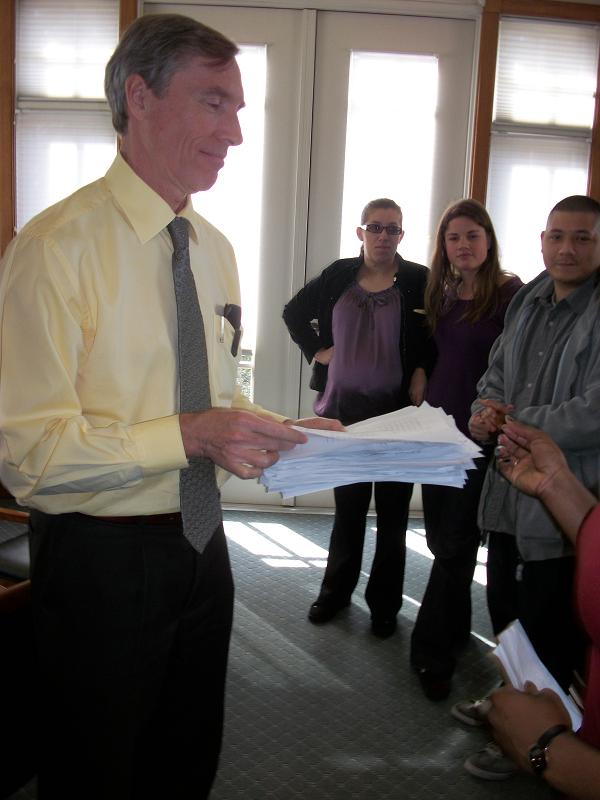
On Monday, March 1, 150 students and workers entered the office of David Oxtoby, President of Pomona College, to deliver their demands for a fair unionization process to him. Hundreds of signed petitions were stacked in Oxtoby’s hands, petitions signed by 90% of the food service workers at Pomona College, demanding that Pomona College agree to a card check neutrality agreement with the dining hall workers. If the College were to accept this card check neutrality agreement, they would pledge to not engage in any anti-union intimidation of workers and recognize the workers’ union as soon as a majority have signed union authorization cards. On Saturday, March 6, workers came forward to speak to students, addressing a rally of more than 400 students assembled in the rain, speaking to their situation and efforts at creating a union.

The Pomona dining hall workers are organizing to establish an independent union in order to collectively fight for a contract and better working conditions. In the Pomona College dining halls, where workers are denied year-round employment, where more than 80% report having been injured on the job, where workers are at-will employee and are routinely fired for being worked to the point where injuries prevent them working any more, where decades of employment provides only the opportunity for decades of poverty-level wages, where legally required breaks have been denied with uniform consistency for years, where the managers compel workers to perform unpaid labor off the clock, and above all, where workers have been robbed of their power, their voice, and their dignity. To the administration, they are merely part of the faceless human capital that greases the wheels of the educational institution, regardless of the fact that they contribute far more to the College than the comfortably positioned PR office bureaucrat who makes certain that every letter published by the College uses the approved font, or even the faculty member who teaches students how to continue reproducing our oppressive social relations.

Pomona College is the second wealthiest liberal arts college in the country, with an endowment of $1.8 billion. An endowment of $1,160,000 per student, with a tuition of $50,000, and Pomona College pays its dining hall workers as little as $10 an hour. With the lack of reliable work that the College offers, many workers – who tend to be the primary breadwinners for their families – come out making between $10,000 and $15,000 per year. Pomona College’s endowment has grown by 240% over the past 10 years. What does that vast increase in wealth mean for the workers? It means absolutely nothing; wages have been stagnant for decades, just keeping up with inflation and lagging behind the cost of living. No matter how much money Pomona College has, it will pay its employees as little as it can get away with.

After years of paternalistic negotiations, after bureaucratic do-nothing committees, after proposals for an ombudsman, after a failed unionization campaign with an outside union, after years of proper channels and no improvement, the dining hall workers are certain that the only means to gain dignity and respect at their work is to organize and create their own union.

The workers have chosen to create their own independent, worker-controlled union and to not relinquish control to a self-interested outside union. They have been failed by the national unions in the past and now they have made complete autonomy and local control an absolute condition of any union organizing. It will be difficult for an independent union of a few dozen workers and scant resources to challenge the billion dollar corporation that is Pomona College, but with student solidarity it is possible, and it may be preferable to a few dozen workers challenging a union that either outright ignores workers who aren’t in thousand-person bargaining groups, or seeks ‘mutually beneficial partnerships’ with employers.

The response from the College administration to all of this? President Oxtoby declares his support of workers’ right to unionize! Simultaneously he rejects all of their demands and refuses to negotiate on the issue of card check neutrality. Oxtoby will allow only for talk of a unionization process that follows the model of National Labor Relations Board vote, a process that is the graveyard of democracy and unionization attempts. Oxtoby demands that the College reserve the right to intimidate its workers, to retaliate against organizing workers, to delay the unionization vote for years, and to appeal any unionization vote for yet more years. These are the points of difference between the process demanded by the workers and the process offered by the College. Unless the College was planning on utilizing some of these anti-union tactics allowed under the NLRB process then there would be no reason in rejecting the card check process.

Oxtoby has revealed the true anti-worker position of the College in statements that deny any need for workers to be concerned with the benevolent, protective employment of the College, even going so far as to call workers ‘naive’:
The assumption, often, with a union is that everything that you have now you will keep and you will get more — you will have all of the channels of communication and ways of working with the college which we’ve developed over the years, I think that’s not correct. I think it’s a little naive.”
The workers know the liberal bullshit of the administration when they see it, and have responded with a hardening commitment to the fair process that 90% of them had originally demanded, in direct rejection of the anti-worker NLRB process that Oxtoby holds to. The orange armbands are staying on in the kitchens of Pomona College.

Meanwhile, out of the public arena, the College has already forced the dining hall workers to attend anti-union meetings where they illegally promised concessions if the workers stop their organizing efforts (covering up their illegal activities with the blatant lie that they implemented these concessions months ago, without any of the workers noticing). The deans, so fond of the liberal college activist who poses no challenge to their own comfort and security, sat one student organizer down to threaten him with the loss of his job with the College if he continued devoting his efforts to the union.

Alongside the administration, numerous supposedly leftist faculty at Pomona College have belittled the workers’ attempts at forming an independent union, apparently unable to believe that workers are capable of organizing themselves without the leadership of decayed professors or bureaucratic outside unions. To them, we repeat the words one worker spoke to the faculty: “We’re not asking for your advice, we’re asking for your support.” At the very least, 90% of the workers have decided that this the course of action they want to take, and the only justifiable action for us to take is to respect their decisions and lend them our solidarity, not our paternalism.

It is no surprise that an elite liberal arts college supposedly committed to social responsibility responds to the organization of its workers in the same fashion as any profit-driven corporation, because that is exactly what the modern college has become through a long process of corporatization. The only structural difference remaining between college and corporation is that as ‘non-profits’ colleges need make only enough revenue to break even, a difference in scale only. The condition of the workers at Pomona College is a result of this corporatization of the college; a result of transformation of Pomona College into Pomona College, Inc.

As students at a corporate college we are now mere consumers of the education commodity. So workers are mere human capital, rather than dignified and respected members of our community. They are expected to have the same relationship with the College community as McDonalds fry cooks have with their customers. What should be a community of equals who are valued for their contributions to the collective education of everyone in our community is instead debased to a rude system of commodities, consumers, producers and exploitation.

Our friends from Direct Action Claremont have participated in occupations at the public universities, and we see this struggle at Pomona College as an extension of that struggle. Both the battle for public education and the unionization efforts at Pomona College are manifestations of resistance to the neo-liberal corporate model of higher education that simultaneously dispossesses students of an education, and workers of dignified labor.

Claremont Solidarity exists to escalate the class struggle at Pomona College. The interests of the workers and the interests of the corporate College are directly opposed to each other; one seeks justice and fairness, the other seeks profit through exploitation. The College will not choose through its own enlightenment to act against its economic interest and allow the workers to organize. It can only be forced to do such. In order to realize progress, we must create a situation of conflict, where the power of the administration is challenged by the power of the workers. And we must make certain at the same time that students understand this conflict, and choose to cast their lots on the side of the workers. We cannot wait for this situation of open class conflict to emerge; time is the College’s most potent weapon, and they intend to delay justice until it is terminally denied. Pomona College will attempt to batten down the hatches and wait for the storm to blow over; we pledge that this storm shall only strengthen until the workers at Pomona College have justice.

We pledge an escalating campaign of confrontational action, as this is the only way to force the College to recognize the workers’ demands. Pomona College cannot run as though everything is normal when the College is refusing to consider the demands of 90% of its food service workers. There is an active labor conflict in Claremont, and we will not let the College forget it. No business as usual!

Claremont Solidarity 

Audacity! Audacity! Ever more audacity!

claremontsolidarity.wordpress.com

Thursday, March 11, 2010

Pomona College Workers Share Testimonies (Republished from LA Indymedia)

by Rockero


Saturday, March 6, 2010 
CLAREMONT, California - Despite a drizzle, students from Pomona and other Claremont colleges held a follow-up rally in support of the unionization drive for food service workers. Last week, students, arm-in-arm with workers, delivered hundreds of petitions requesting card-check certification for an independent union to Pomona College president David Oxtoby. The petition also requested non-interference from the College during the unionization drive.


Saturday's action, timed to coincide with a meeting of the Pomona College trustees, allowed workers to share their testimonies and featured the participation of religious leaders, musicians, and the grandson of the late labor leader César Chávez, Anthony Chávez.

As the crowd of mostly students assembled outside Bridges Auditorium, they chanted their demands for justice. Mariachi Serrano de Claremont sang "Tristes recuerdos."

A student organizer began with a summary of the situation. "The workers on Monday went to President Oxtoby's office and asked for a non-intimidation agreement, and he did not agree to that. I don't care what words he used, but he did not agree to that.1 So we're here today to show our support and hear from workers, what they think, what they feel. It's the first time that they've had this opportunity, so we're here to show our support for that."

She then introduced Father Patricio Guillén, a longtime social justice advocate in the Inland Empire. "Good afternoon. ¡Sí se puede! ¡Sí se puede! ¡Que viva César Chávez! ¡Que vivan los trabajadores! I was invited to come and share with you, and I think that it's a beautiful occasion, because sometimes crises are looked at as curses, but we are in a crisis in this nation because we have followed the path of power and arrogance rather than humility and service. And we have forgotten that we are one human race bound together and our destiny is to work together to find solutions to the problems that we run into as we journey towards eternity. We just lost a beautiful person, Howard Zinn, he wrote the [People's] History of the United States, and he wrote the good and the bad about it, not to downgrade, but also to remind us that we are on a journey and we have some difficult moments like right now. Here, the workers in Claremont College, Pomona College. As a democracy, we don't have an economic system that's democratic. Eighty percent of the goods in our nation, in the economy is in that hands of about 25%, and 95% of the people posess only 20%, that's not democracy. It's not democracy either to see the political power be concentrated upon the corporations that forget the human person and the dignity of each one of us.

"We also know that we have lost the battle, to some degree, on education and the ideology of imperialism. The means of communication have also been taken over by the powerful. We, as citizens of this coutry have taken for granted our freedom and now, we have to struggle and fight and take those liberties and justice for everyone. Today we're present to say we're in solidarity with the workers of this community because we know that the workers are the ones that do the hardest part of the labor, and they get the least. I think that's an injustice. A living wage should be a dignified wage, a wage for people to live a decent human life! That's why I'm here, and that's why you're here, and I'm proud of you as young people that you're taking seriously your role in the world today. We can co longer afford to have students in our universities that are ivory towers, isolated from the real and the important struggle for like and for liberty.

"That ugly reality that we have is focused on the corporations, which have forgotten, just as the Supreme Court said that they are persons, therefore they can give money to the candidates that run for office. Well if they are, then why don't they pay taxes like everybody else?

"We know that at one time we could say that we were a government for the people, of the people, and by the people, but yet, we have seen it go in the opposite direction: A government by the corporations, for the corporations, and by the corporations. That's because we fell asleep. And we listened to the, as it were, isolated and distorted presentations of 'We don't want large government.' But we want pricate, large corporations? What a contradiction! Today we need to realize to take upon our own the torch of freedom. Our founding fathers said that all men and women are created equal, and they are entitled to their inalienable rights to life, liberty, and the pursuit of happiness. It's not true for the workers! That's why we're here. We don't just want one sector of our country to live a high and good life. We want everybody to have a dignified life. We want to live in a world where we don't have to go to war to prove that we are a great nation. We want justice and we want to struggle for it--and democracy--so we can say to the world that we are a people that love and want and respect democracy and justice for all."

Next, Edith, a worker, spoke."Estoy aquí por justicia, y gracias a todos por estar aquí. Mi nombre es Edith [...], yo sólo tengo dos años de trabajar aquí en el colegio y trabajo en el área del salad bar, y me contenta, lo hago con mucho gusto para ustedes.

"Me gusta porque tengo experiencia, como diez años trabajé en el distrito escolar de Ontario, y esto me sirvió de experiencia, y creo que esto me ayuda a desempeñar mejor mi labor.

"Y aquí he notado unas inconveniencias, algunas que existen, injusticias para los compañeros. Como los que han sufrido algunos accidentes. Y los tratos que a ellos se les dan, muchas veces no son justos, y eso para mí se llama injusticia. El miedo que yo tengo es que si algún día, Dios no lo quiera, me pueda suceder algo. Y entonces, ¿qué va a pasar conmigo? Bueno, si ellos están pasando por eso, quizás algo me ha de pasar a mí, y entonces, ¿quién me va a apoyar?"

[I'm here for justice, and thanks to all for being here. My name is Edith [...], I've only been working here at the college for two years, and I work in the salad bar area, and it makes me happy. I'm glad to do it for you. I like it because I have experience, I worked for the Ontario school district for about ten years, and I think it helps me better undertake my work. And I've noticed a few problems here, a few injustices that have happened to some co-workers. Like those who have been in accidents. And the treatment that they receive, are often unfair, and to me, that's injustice. The fear I have is that some day, God forbid, something might happen to me. Then what will become of me? Well, if they are going through this, something could happen to me, and then, who would be there for me?]

The next speaker was Elisea. "Buenas tardes a todos los estudiantes y presentes señores, quizás algunos profesores están aquí en este momento. Trabajadores de Pomona College que nos van a escuchar y tal vez nos pueden ayudar un poquito en esta marcha, en esta lucha que estamos empezando ahorita. Mi nombre es Elisea [...], mi profesión es cashier, clean-up, y set-up. Tengo tres cosas que hacer en el dining hall. Gracias por el apoyo que todos los estudiantes nos han dado, no desde ahorita sino desde siempre. Han pasado años, tengo quince años trabajando ya en el colegio con los estudiantes y siempre nos han ayudado en algunas luchas que hemos tenido, en algunos problemas, y han sido siempre con nosotros aunque tal vez no lo merezcamos pero ellos dejan de hacer sus tareas por estar con nosotros. Pero ellos dicen, 'No le hace. Estaremos con ustedes siempre en la lucha.'"

[Good afternoon to all the students, and maybe there are some professors here with us? You'll hear us Pomona College workers and maybe you can help us a little in this march, in this struggle we're now beginning. My name is Elisea [...], my profession is cashier, clean-up and set-up. I have three jobs in the dining hall. Theanks for the support all the students have given us, not just now, but always. Years have passed, I've been working at the college with the students for fifteen years, and they've always stood with us in some of the struggles we've had, on some problems, and they've always been with us even though we might not deserve it, but they leave their homework aside to be with us. But they say, 'It doesn't matter. We'll always be with you in the fight.'"]

Francisco then gave his testimony. "Mi nombre es Francisco. Yo tengo trabajando para Pomona dieciséis años. A mí lo que me gustaría de todo esto es que se pudiera contratar a más empleados para evitar accidentes. Porque así podemos luchar mejor como podemos trabajar. Porque yo, hace como cinco años tuve un accidente porque tuve que hacer 40 pizzas en una hora. Y con tanta presión... Y yo diría que así como, estando unido todos nosotros como empleados, podemos mejorar todo y tener más poder nosotros contra los empleadores, porque así podemos luchar contra ellos."

[My name is Francisco. I've been working for Pomona for sixteen years. What I'd like to see come out of this is the hiring of more workers to avoid accidents. Because that way, we can improve the ways we're able to work. Because about five years ago, I had an accident because I had to make forty pizzas in an hour. And with so much pressure... I'd say that, us all being together as employees, we can improve everything and have more power for ourselves against the employers, because that way we can fight back against them.]

Don spoke next. "Hello everybody. First of all, I wanna thank all you guys for coming out, supporting us. I've known some of you since you were freshmen, and you're seniors now. And we get, you know, attached to you just like teachers do. So some of you, I feel like you're kinda like my children. So I thank you guys so much for supporting us, most of what--matter of fact, all of what my co-workers say, it's actually all true. And any time anyone has any question and wanna come talk to me, you're welcome to come speak to me freely. Just walk up to me and let me know. I just wanna say also, I came to Pomona because I thought it would be a pleasant work environment. You know, I'm a student myself. I'm back in school. Working at a school actually helps me out. That's why I have a special relationship with most of the students here. And I'm just for fairness. Everything you guys protest, we protested the same thing when we were in college. And it's kinda sad to say that many years later we have to still do this, but this has to be done. We definitely need a union."

Juan then took the stage. "Hola, buenas tardes. Mi nombre es Juan. Soy trabajador de Pomona. Tengo nueve años trabajando. Trabajo de dishwasher. Y quiero darle la gracias a todos por el apoyo que nos están brindando. Nosotros, nos reunimos para tratar de tener el apoyo de todos ustedes y lograr algo, y queremos un poco más de respecto para todos y un mejor salario. Y de mi parte, antes que todo, gracias por el apoyo todos ustedes."

[Hello, good afternoon. My name is Juan. I'm a Pomona worker. I've been working for nine years. I'm a dishwasher. I want to thank you all for the support you've been showing us. We got together to try to get your support and achieve something, and we want a little more respect for everyone and a better wage. For my part, first of all, I want to thak you for your support.]

Benny spoke last. "Gracias por apoyarnos hoy y siempre. Y en verdad, necesitamos todo ese apoyo, porque hay muchas cosas que queremos mejorar en las cocinas de Pomona. Necesitamos que nos den más respecto, y que nos tomen un poco más en cuenta, porque parece que nosotros, el departamento de food service, somos los más abandonados. Ustedes siempre miran unas flores muy bonitas en los jardines de Pomona. Siempre pueden mirar edificios muy bonitos, pero no muchos de ustedes saben lo que realmente pasa en las cocinas y es lo que nosotros, es lo que estamos tratando de hacerles saber en este día, todas las injusticias que estamos pasando. En el pasado ha habido personas, compañeros de trabajo que se han lastimado, y por las pólizas que tiene el colegio, esas personas, después de un año, ya no han sido aceptadas para seguir trabajando. Esas personas han perdido su casa. Se sienten con mucha depresión y yo creo que es necesario cambiar un poco las pólizas. Y creo que todos juntos podemos hacer algo para mejorar todo el ambiente que tenemos aquí en Pomona College."

[Thanks for supporting us today and always. And truly, we need all this support, because there are many things we want to improve in Pomona's kitchens. We need to be accorded more respect, and to be considered, because it seems that we, the food service department, are the most neglected. You always see pretty flowers in Pomona's gardens. You can always see beautiful buildings, but not many of you really know what happens in the kitchens, and that's what we are trying to show you today, all the injustices that we've been experiencing. In the past there have been people, co-workers, who have been hurt, and by the policies that the college has, those people, after one year, are no longer accepted as workers for the following year. Those people have lost homes. They become very depressed and I believe that those policies need to change a bit. I think that together, we can all do something to improve the environment we have here at Pomona College.]

The students and workers then marched to the Smith Campus Center, where they heard from a few more workers, Professor José Calderón, who read a statement of solidarity from Dolores Huerta. Twenty five other colleges also sent letters of support, the professor reported. He also encouraged the students to challenge their professors to become involved in the social change they so often write about, and discussed the card check process. He then informed the crowd that the local Minuteman had taken a position against the creation of a national holiday for César Chávez, saying that "what he did does not merit a holiday,"2 and argued that Chávez does deserve a national holiday for his legacy of non-violence and unity.

Anthony Chávez spoke last, and he began by thanking the professors and students for their involvement in the struggle. "I've been asked to come and speak because I'm César Chávez's grandson, and I'm always very proud of my tata and all of his great work, but before I was even born, my grandfather was out working on behalf of other college staff and faculty when they were organizing. So today, I stand with you as a former college student who's here to see justice for those who feed all the students on the campuses. You guys are all here because you recognize the misnomer promoted by college administrators that say that the dining room workers can only decide the issue through secret ballot elections, and these administrators claim that this is the only way to have a democratic alternative.

"These administrators know this nation's labor laws are broken, they know that when workers vote to be in the union, it's done like any other election in America. They know that all political parties are granted the opportunity to share their opinion, but when employers use a secret ballot election, it's management-rigged balloting. Employers hold all the power, they control all the information the workers get, and they routinely poison the process through intimidation, coercion, and firing. The food workers' struggle here is not new for me, because I grew up among many other types of food workers. The farmworkers, too, have often seen the growers use the secret ballot election as another tool of oppression. At Giumarra Vineyards, the world's largest grape corporation, where I was brought up in Kern, California, workers faced cruel working conditions, and mistreatment, and even two died from extreme heat, to bring us all the fruits and vegetables we enjoy. So 75% of the workers at Giumarra signed a petition saying they wanted to be represented by the United Farm Workers, and a week later, after a secret ballot election, they lost by 49%. California state later threw out this election because of its illegal threats and coercion against the employees. And that's why the farmworkers have convinced the state legislature to pass a bill in each of the last three years, letting the workers choose a process other than secret ballot elections only to have that measure vetoed each time by Governor Schwarzeneggar. And it's why the labor movement is trying to pass a similar bill, the Employee Free Choice Act, in congress, with the support of President Obama. Our workers should be able to vote by signing their name in the privacy of their home or someplace else away from employee bullying. After all, the law allowed homeowners that they couldn't afford with a simple signature. The law allowed banks to loan out money to people who couldn't afford to borrow with a simple signature. The law allow lenders to package these loans and sell them, crippling our economy, with a simple signature. And with a simple signature, all of you can join a gym, and with a simple signature, any one of us can join the armed services. But when American workers seek their fair share in the economic wealth that they themselves produce here at home, they can't sign their names to join a union. What's really at stake here on Pomona College and across this nation is simple self-determination. Courageous workers on this campus are taking a stand, demanding the freedom of a union. Therefore, those of you, as students, have some important questions to ask yourselves. Are you only responsible to your parents and yourselves for being successful in your studies? Or do you owe a broader responsibility to support the dining hall workers who are struggling for a better life against shameful abuse defined on the job site. Is it enough to just sit in class and just study the social ills of society? [...] You have a responsibility to go out there and take part, and be part of the solution. Pomona College cafeteria workers' authentic non-violent aspirations for self-determination cannot be fulfilled in one of the most liberal and wealthy campuses in America, where else is it gonna happen? Who else is gonna do something if not you? The college workers are heroically doing something to redress years of grievances, then what does it say about students on this campus if they remain indifferent, or neutral? How do you stay apathetic in the face of immoral treatment of workers whose only sin is seeking a better life for themselves? Especially when you see the workers the most, and when your tuition pays their salaries? Some words my grandfather shared with students may help us here in this time. He said, 'We cannot seek achievement for ourselves and forget about progress and prosperity for our community. Our ambitions must be broad enough to include the aspirations and needs of others, for their sakes, and for our own.'"

Spang, a Pomona student, then voiced his support for the workers, and Professor Calderón closed the rally by leading a rendition of the farmworker anthem "De Colores."

_____________________________________________
1. Oxtoby, David. "Text of President Oxtoby’s E-mail." Workers for Justice, March 7, 2010. http://workersforjustice.org/2010/03/text-of-president-oxtobys-e-mail/. Accessed March 11, 2010.

2. Wall, Stephen. "Speaker blasts observance of Chavez holiday." San Bernardino Sun, March 2, 2010. http://www.sbsun.com/news/ci_14499296. Accessed March 11, 2010.


05...


07...  


08... 


09... 


Thursday, March 4, 2010

Students Support Worker Demands for Independent Unions and End to Abuses (Republished from LA Indymedia)

by Rockero


Monday, March 1, 2010
CLAREMONT, California - The student movement made an unexpected move in solidarity with university employees in a large-scale action at Pomona College, a private institution and part of the Claremont consortium of colleges at the eastern edge of Los Angeles County. Well over a hundred students joined with numerous employees of the three campus dining commons, other Pomona employees, and a few faculty members to deliver a petition to Pomona President Oxtoby.


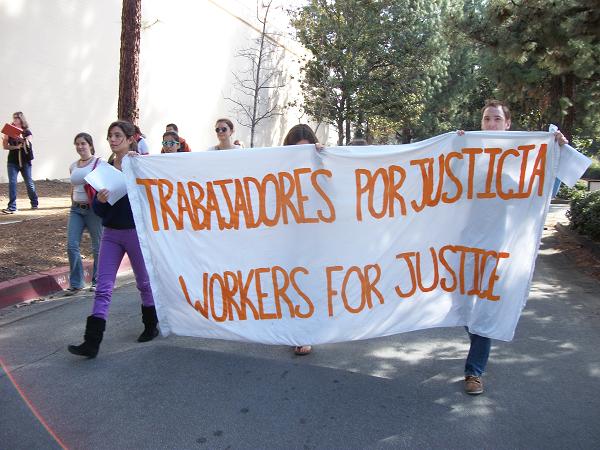
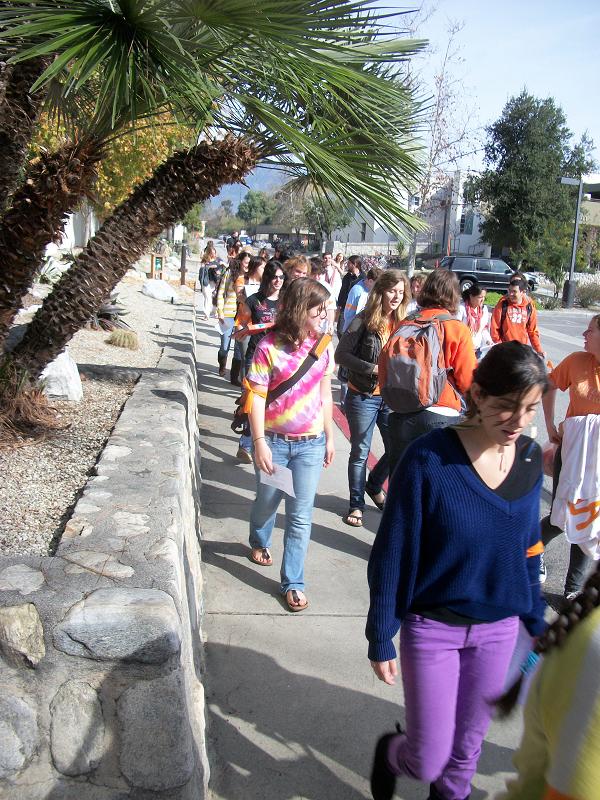
The mobilization began in the morning, when students from Pitzer College assembled on their campus, while Pomona students gathered on theirs. At about ten, the two contingents converged behind the banner "Trabajadores Por Justicia", singing the union hymn "No nos moverán."

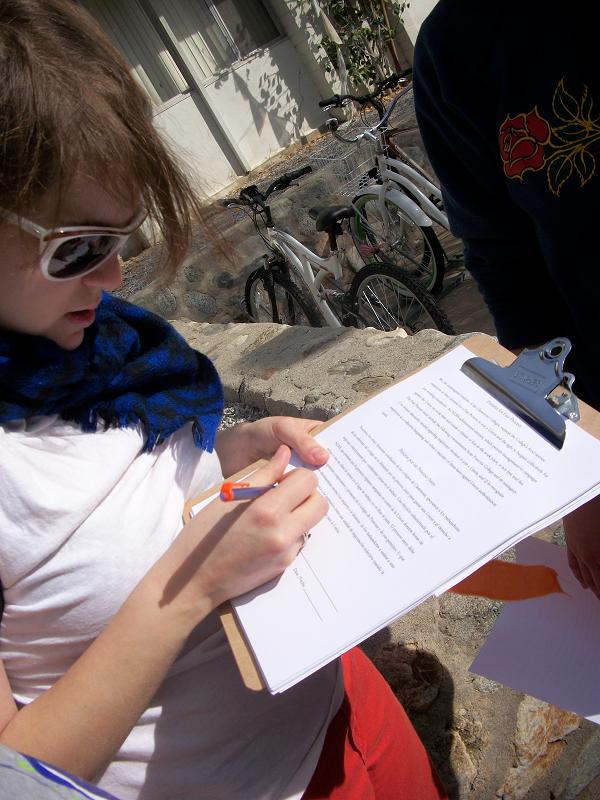
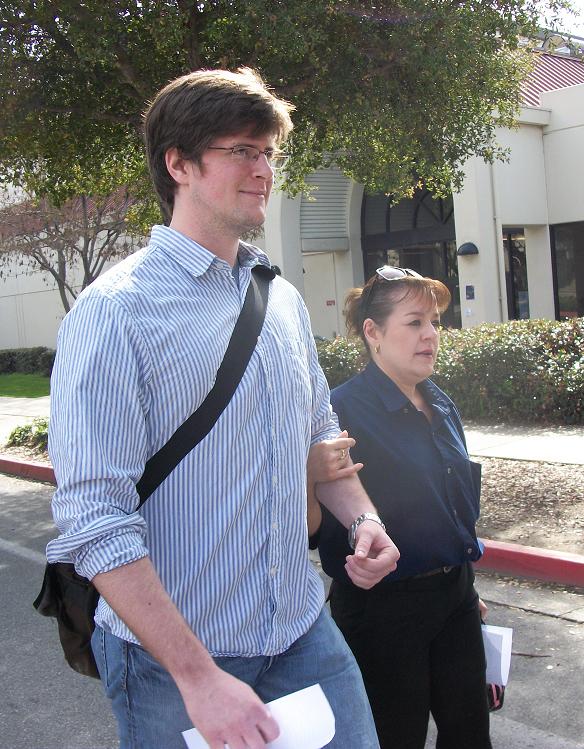
Students, arm-in-arm with workers, entered the president's office two-by-two to deliver the signed petition demanding a neutral card check process to form a union. This is the process that would be permitted in all workplaces if the much-hyped but now-stalled Employee Free Choice Act (EFCA) would have become law.

The petition read, in part, "An NLRB-administered election, which permits management to campaign against the Union on work-time and create a climate of fear in the workplace, is not free and fair." It went on to demand employer neutrality in the workers' decision to organize, and recognition of a majority-backed union.

Previous efforts to organize food service workers on the campus have been thwarted by intimidation, collaboration between the administration and upper-level bureaucrats from established unions and bribery-based decertification drives by management.

This time, however, the workers are seeking an independent union to collectively bargain in their interest. Over 90 percent of the food service workers signed the petition.

Forming an independent union is the first step toward justice for the workers, who complain of poor salaries, few opportunities for advancement, abuses such as disallowance of breaks and working off the clock, and underemployment.

"The salaries that we have are miserable," reports Maria R. Garcia, a Pomona food service worker. "I've been working here for ten years already. I started at $8.40, and now it's $10.65 [per hour]. Two years without a raise. The first year, they said I didn't qualify because I was pregnant, and I had an injury. Another thing, we work for seven-and-a-half months of the year. So how do you support a family?" She made it clear that it wasn't an issue of disliking the job. "We like working here; we love working here. But with these conditions, it's hard. They just make it worse every year."

The action, impressive for its size alone, is all the more remarkable in that the student/worker organizers were able to keep all of their plans secret from the Pomona administration, taking President Oxtoby completely by surprise.

Efforts were made to ensure that the message would reach its intended audience. According to one of the planners of the events, "one of our organizers, having been head sponsor of the Sponsor Program, had arranged to have a meeting about the Sponsor Program with President Oxtoby at ten o'clock today to make sure that Oxtoby was at his office."

The Sponsor Program is "a residential program through which all first-year students are housed with approximately 15 other first-years led by two sophomore sponsors," according to the college's website.

While the day's emphasis was definitely on the exploitation of workers, the student movement, which began in opposition to budget cuts and tuition hikes and has since expanded to question the growing privatization of public education, occupy and liberate student spaces, and demand liberatory (rather than neoliberal) education, formed the dramatic backdrop for the action, particularly in light of the multiple actions being planned for Thursday.

"Both what is happening at the UCs and what's happening at Pomona College right now is due to misguided attempts to balance budgets," explained Lucy Lombard, a senior International and Intercultural Studies major at Claremont.

"And attempts to turn the university into more of a corporation, which prioritizes balancing budgets over education, over the university's rightful place in society, which is to create new vision of society, of what society could become," added Christopher Wohlers, a senior Physics and Environmental Studies major.

While President Oxtoby smiled and politely thanked the petitioners as they piled the stacks of documents into his hands, he was unable to dissimulate his true emotions: several students and workers reported viewing his hands tremble as the signed forms mounted. One student organizer commented, "He realized that he's gonna have a fight ahead of him. If he wants to maintain business as usual at the university, he's going to have a difficult time doing it, and I think this morning he realized that he's gonna be a busy man."


Signing petitions


Pitzer contingent march


Thumbs-up from worker


Arm-in-arm


Arm-in-arm


Students and workers unite


Arm-in-arm


Outside the administration building


Arm-in-arm


Arm-in-arm


Outside President's office


A busy man